
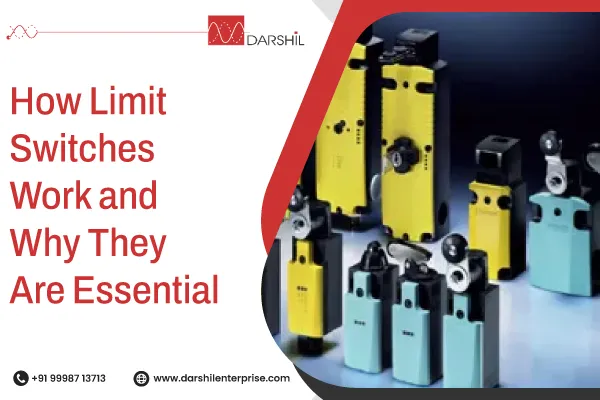
Industrial automation has grown rapidly over the past few years, making accuracy, safety, movement control, and equipment protection more important than ever. As machines continue to evolve, industries depend on reliable electrical sensing devices to monitor position, movement, and mechanical contact. One device that has played a major role across all automation systems is the limit switch. Whether used for detecting machine position, controlling motion limits, preventing overtravel, or activating specific operations, Limit Switches form an essential part of electrical and mechanical safety.
What Are Limit Switches?
Limit Switches are electromechanical devices used to detect the physical presence, movement, or position of an object. They operate through mechanical contact when a machine part touches an actuator or lever of the switch, triggering a specific electrical response.
Limit switches are widely used because they deliver high accuracy, fast response, and long-term durability in harsh industrial conditions.
Applications include:
- Detecting the end of travel in conveyor belts
- Monitoring machine position
- Preventing overtravel in moving parts
- Triggering automatic machine stops
- Controlling lift and hoist movement
- Detecting robotic arm positions
- Providing safety interlocking
How Limit Switches Work: An In-Depth Explanation
To understand how Limit Switches work, imagine a machine part moving along its path. When the moving component hits the actuator arm or plunger of the switch, the internal contacts change state. This action either opens or closes the electrical circuit.
Basic Working Steps
- Actuator Movement
A machine component touches the actuator, lever, roller, or plunger. - Internal Contact Change
The internal contacts shift from one position to another.
They can:
Break the circuit (NC contact opens)
Complete the circuit (NO contact closes) - Electrical Output Triggered
Signals are sent to control panels, motors, PLCs, or controllers. - Machine Responds
Depending on the setup, the machine may:
Stop
Reverse
Slow down
Activate another process
Why Limit Switches Are Essential in Modern Industry
Modern industry depends heavily on precision. Machine movement and position need to be controlled accurately to avoid accidents, production defects, and equipment failure. Below are the key reasons why limit switches are indispensable:
- Accurate Position Detection
Limit switches offer reliable mechanical sensing which supports accurate machine positioning. - Controlled Machine Movement
They help machines avoid overtravel, preventing damage to mechanical parts. - Strong Performance in Harsh Environments
Heat, dust, oil, vibration, and impact do not significantly affect their performance. - Low Maintenance Requirement
Limit switches operate for long periods with minimal intervention. - Industrial Safety
When used correctly, they help stop machines at precise points, protecting equipment and operators.
Components of a Limit Switch
A limit switch consists of several parts that work together:
- Actuator / Operating Head
This is the part that physically contacts the machine. Types include plungers, rollers, rods, and levers. - Switch Body
Houses internal electrical components. - Electrical Contacts
These change states when the actuator moves. Contacts include NO (Normally Open) and NC (Normally Closed). - Terminals
Used to connect wires to the switch.
Understanding these components helps technicians and engineers pick the right Electrical Limit Switch for each application.
Where Limit Switches Are Used: Major Industrial Applications
Limit Switches play an essential role in numerous sectors:
- Manufacturing
- Automated conveyor systems
- Robotics
- Packaging machinery
- Material handling
- Elevators
- Textile machines
- Pharmaceutical production
- Automotive assembly lines
- CNC machinery
- Welding automation
- Food processing plants
Benefits of Using Limit Switches
Installing limit switches contributes several advantages, which strongly justify their importance:
- High Reliability
Mechanical operation provides dependable performance without complex components. - Cost-Effective
Compared to sensors or advanced electronics, limit switches offer excellent value. - Easy to Install
With a simple mounting structure, technicians can install them quickly. - Long-Lasting
Built to handle repetitive mechanical contact and harsh conditions. - Versatile Applications
Suitable for automation, safety systems, and mechanical control. - Accurate Control
Offers precise feedback about machine movement.
How to Install Limit Switches Properly
Proper installation is necessary for accurate performance. Follow these steps to integrate limit switches into your system:
- Choose Correct Mounting Position
Pick a point where the machine part moves consistently and predictably. - Align Actuator Correctly
The actuator should move smoothly without excessive force. - Wire the Contacts
Connect the NO or NC contacts depending on your circuit requirement. - Test Contact Movement
Manually operate the actuator to check response time. - Verify with Full Machine Operation
Run the machine and check if the switch triggers at the correct moment. - Secure All Wiring and Screws
Loose parts can affect accuracy.
A properly installed Electrical Limit Switch supports long-term reliability and precise motion control.
Maintenance Practices for Limit Switches
Limit switches have simple construction, but regular maintenance extends their lifespan:
- Cleaning dust and oil
- Checking for loose screws
- Testing actuator movement
- Checking mechanical alignment
- Inspecting terminals for corrosion
- Replacing worn actuators
Common Mistakes to Avoid When Selecting Limit Switches
Many users face problems because they pick the wrong switch type. Avoid the following mistakes:
- Selecting switches with incorrect actuator type
- Ignoring operating environment
- Choosing low-quality materials
- Improper mounting
- Incorrect wiring of contacts
- Using switches not rated for industrial loads
How to Choose the Right Limit Switch for Your Application
Consider the following:
- Movement type
- Contact type required (NO / NC)
- Environmental conditions
- IP rating
- Frequency of operation
- Mounting style
- Type of actuator needed
- Electrical load capacity
Why Choose Us
Darshil Enterprise has established itself as a dependable supplier of high-quality electrical and industrial automation products, including advanced Limit Switches and premium Electrical Limit Switch models. We believe in providing accurate product guidance, long-lasting solutions, and reliable quality to support the safety and productivity of our customers. When you choose Darshil Enterprise, you gain a partner who values customer satisfaction, technical expertise, and genuine product supply. Our commitment to serving every client with the right product selection and professional support makes us a preferred name among industries across India.
Conclusion
Limit switches play an essential role in controlling movement, detecting position, and maintaining safety in every industrial setup. With advancements in automation, choosing reliable devices becomes crucial for consistent performance. High-quality Limit Switches and Electrical Limit Switch models provide mechanical accuracy, long service life, and dependable operation even in challenging working conditions. Understanding how they work, their installation process, and maintenance requirements gives you the knowledge needed to make smart decisions. With trusted suppliers like Darshil Enterprise, industries receive dependable limit switch solutions that contribute to better precision, productivity, and long-term operational stability.
For more expert guidance on limit switches, call +91 98983 38702 or email info@darshilenterprise.com