
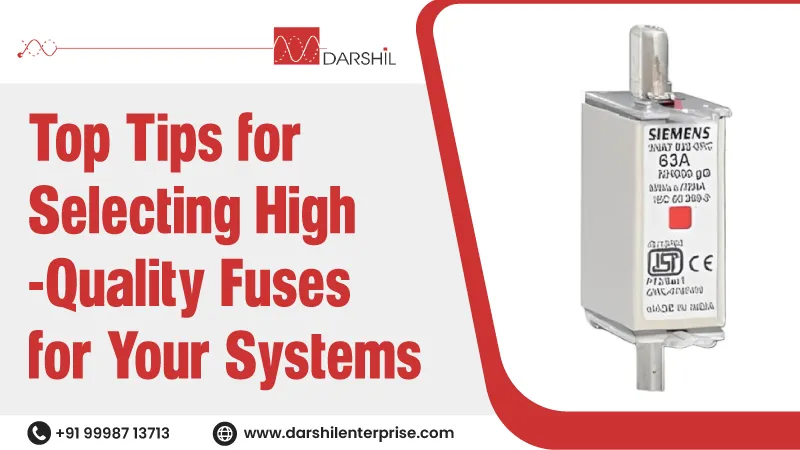
Electrical safety starts with the right protection devices. Fuses play a critical role in protecting equipment, systems, and people from electrical faults. You rely on them to interrupt excess current before damage occurs. Selecting the correct fuse is not a minor decision. It directly affects system reliability, downtime, and long-term cost. It focuses on performance, application suitability, and practical selection factors. Darshil Enterprise supplies reliable fuse solutions backed by product knowledge and industry experience.
Understanding the Role of Fuses in Electrical Systems
A fuse is a sacrificial protection device. It interrupts current flow when current exceeds a defined limit. The fuse element melts due to heat generated by overcurrent. This action isolates the faulty circuit. The objective is simple. Protect wiring, components, and connected equipment from damage. Fuses respond faster than many other protection devices. This speed makes them effective against short circuits and overloads. In industrial, commercial, and residential systems, fuses limit fault energy. Reduced fault energy lowers the risk of fire and equipment failure. High-quality fuses provide predictable performance. They operate within specified time current curves. This predictability matters when protecting sensitive electronics or high-value machinery.
Why Fuse Quality Matters
Low-quality fuses create hidden risks. Inconsistent melting points lead to delayed operation. Delays allow excessive heat buildup. Heat damages insulation and components. In severe cases, it causes fires. High-quality fuses use calibrated elements. Materials meet international standards. These fuses interrupt faults cleanly without fragmentation. They maintain stable performance across temperature variations. You reduce downtime when fuses operate correctly. You also simplify maintenance planning.
Current Rating and Voltage Rating
Current rating defines the maximum continuous current a fuse can carry. You select this value based on normal operating current. A margin above normal load avoids nuisance blowing. The voltage rating indicates the highest voltage the fuse can safely break. This rating must meet or exceed system voltage. Using an underrated fuse risks arc flash and failure to interrupt. Both ratings work together. A fuse with correct current rating but low voltage rating fails during fault interruption. High-quality fuses specify both clearly. A trusted Fuse Dealer in Gujarat provides datasheets and selection guidance to prevent rating mismatches.
Interrupting Capacity and Fault Levels
Interrupting capacity defines the maximum fault current a fuse can safely break. Industrial systems can experience very high fault currents. If fault current exceeds fuse capacity, the fuse may rupture violently. This failure damages enclosures and injures personnel. You must calculate or estimate prospective short-circuit current. Select fuses with interrupting capacity above this value. High-quality fuses publish verified interrupting ratings. This transparency supports safe design.
Environmental and Installation Factors
Operating environment affects fuse performance. Temperature influences current carrying capacity. High ambient temperature reduces allowable current. Humidity and dust affect exposed fuse holders. Industrial environments demand sealed designs. Vibration affects contact integrity. Machinery panels require robust mounting. Installation method matters. Poor contact increases resistance. Increased resistance raises temperature.
Replacement and Maintenance Considerations
Fuses require replacement after operation. Ease of access matters. Clear labeling reduces replacement errors. Interchangeable sizes simplify inventory. High-quality fuses maintain consistent dimensions. This consistency supports safe replacement. Routine inspection checks discoloration, loose holders, and heat damage.
Cost Value in Fuse Selection
Low-cost fuses appear attractive. They reduce upfront spending. Hidden costs appear later. Frequent replacement increases labor time. Equipment damage raises repair expenses. Downtime impacts production. High-quality fuses reduce these risks. They operate predictably. They protect assets effectively. Value-based selection focuses on lifecycle cost, not unit price.
Industry-Specific Fuse Selection
- Different industries face unique challenges.
- Manufacturing plants run motors continuously. Fuses must handle thermal cycling.
- Commercial buildings require reliable lighting and HVAC protection.
- Data centers protect sensitive electronics. Fast and precise interruption matters.
- Renewable energy systems face fluctuating loads.
- Darshil Enterprise supports diverse sectors with application-specific fuse solutions.
Common Mistakes to Avoid
- Oversizing fuses reduces protection. Under sizing causes nuisance operation.
- Ignoring voltage rating creates safety hazards.
- Using unverified products risks failure.
- Assuming one fuse fits all applications leads to poor performance.
Why Choose Us
You choose Darshil Enterprise because you value dependable electrical protection. The team understands fuse applications across industries. Product selection focuses on safety, performance, and compliance. Guidance remains practical and clear. Availability supports urgent requirements. Technical clarity reduces risk during design and maintenance. Darshil Enterprise builds long-term partnerships by delivering reliable fuse solutions that support stable and safe electrical systems.
Conclusion
Selecting high-quality fuses protects systems, equipment, and people. You must consider current rating, voltage rating, time response, and interrupting capacity. Environmental conditions and coordination with other devices also matter. Low-quality fuses increase risk and long-term cost. High-quality fuses deliver predictable protection and stable operation. Darshil Enterprise supports correct selection with technical understanding and reliable supply. When you choose the right fuse and the right partner, your electrical systems operate safely, efficiently, and with reduced downtime.
For detailed guidance on fuse selection. Call +91 98983 38702 or email info@darshilenterprise.com
Key Takeaways:
- High-Quality Fuses Are Critical for Electrical Safety
Properly selected fuses protect equipment, wiring, and personnel by interrupting overcurrent quickly and predictably before damage occurs. - Correct Ratings Ensure Reliable Protection
Choosing the right current rating, voltage rating, and interrupting capacity is essential to avoid nuisance blowing, overheating, or unsafe fault interruption. - Fuse Type and Time Response Must Match the Application
Fast-acting fuses protect sensitive electronics, while slow-blow fuses handle inrush currents in motors and transformers without unnecessary failures. - Environmental and Coordination Factors Impact Performance
Temperature, humidity, vibration, and coordination with breakers or relays directly affect fuse reliability and overall system selectivity. - Value Comes from Lifecycle Performance, Not Just Price
High-quality fuses reduce downtime, maintenance costs, and equipment damage, delivering better long-term value than low-cost alternatives.